
World News
Delta Connection DL3543 Emergency Landing: What Happened?


When the first reports about the delta connection dl3543 emergency landing began circulating, many travelers immediately imagined something serious had gone wrong.
After all, the phrase “emergency landing” can sound dramatic.
But the reality of what happened tells a different story, one that actually highlights how aviation safety systems are designed to work.
Shortly after departing from Minneapolis–St. Paul International Airport, the regional jet received a pressurization alert while climbing. This warning suggested there might be an issue with the system that manages air pressure inside the cabin.
The pilots responded immediately. They followed standard procedures, declared an emergency, and chose to return to the airport as a precaution. The aircraft landed safely, and passengers disembarked without injuries.
What might sound alarming at first was actually a clear example of trained professionals doing exactly what they’re trained to do.
Timeline of the DL3543 Incident
Departure and Planned Route
Delta Connection flight DL3543 was operated by Endeavor Air, a regional airline that flies on behalf of Delta Air Lines.
The flight departed from Minneapolis on a routine scheduled route. After takeoff, the aircraft began its climb toward cruising altitude. At that stage, everything appeared normal and there were no visible issues.
For passengers on board, the flight likely felt like any other departure.
Emergency Declaration
During the climb, the pilots received a warning related to the aircraft’s cabin pressurization system.
This system is responsible for maintaining comfortable air pressure inside the aircraft while it flies at high altitudes where outside air contains much less oxygen.
The alert could have been caused by a pressure irregularity or even a faulty sensor. Regardless of the cause, pilots treat these warnings seriously.
The crew declared an emergency and set their aircraft transponder to 7700. It is the international code that signals an in-flight emergency to air traffic control.
Controllers responded immediately and provided the aircraft with priority handling so the pilots could focus fully on the situation.
Delta Connection DL3543 Emergency Landing: What Happened
Once the emergency was declared, the crew began a controlled descent and turned the aircraft back toward Minneapolis.
This decision is known as a precautionary return. Instead of continuing the flight or diverting somewhere unfamiliar, the pilots chose to go back to the airport they had just departed from.
Minneapolis–St. Paul International Airport offered everything the flight crew might need: maintenance technicians, emergency response teams, and familiar operating procedures.
As part of standard emergency protocol, airport rescue vehicles were positioned along the runway while the aircraft prepared to land.
The landing itself was smooth and uneventful.
After reaching the gate, passengers exited the plane safely while airline staff helped them arrange new travel plans.
Why Pressurization Alerts Are Treated Seriously
Airplanes typically cruise at altitudes above 30,000 feet. At those heights, the outside air does not contain enough oxygen for people to breathe comfortably.
That’s why aircraft use sophisticated pressurization systems to regulate the air inside the cabin.
If the system detects something unusual, even a minor change, it sends an alert to the pilots. These warnings allow the crew to respond early before any situation becomes serious.
Declaring an emergency in cases like this does not mean the aircraft is in immediate danger. Instead, it ensures that the crew receives priority assistance from air traffic control and that emergency teams are ready on the ground if needed.
In aviation, early action is always better than waiting.
Why Returning to Minneapolis Was the Best Decision
Choosing to return to Minneapolis made strong operational sense.
The aircraft had just departed from the airport, which meant the crew was already familiar with the airspace, runway layout, and communication procedures. Familiar surroundings can make decision-making faster and easier during unexpected situations.
Minneapolis also provided immediate access to maintenance teams who could inspect the aircraft once it landed.
If the pressurization alert was caused by a sensor issue or a technical problem, technicians could begin diagnosing the situation right away.
For safety-related concerns, returning to the departure airport is often the safest and most efficient choice.
What Declaring an Emergency Really Means
The phrase “declaring an emergency” often sounds alarming to people outside aviation.
In reality, it’s a structured safety process.
When pilots declare an emergency, they usually enter the 7700 code into the aircraft’s transponder. This instantly notifies air traffic controllers that the flight requires priority handling.
From that moment, other aircraft are moved out of the way, and controllers focus on assisting the flight. Emergency vehicles may also prepare on the ground as a precaution.
This system allows pilots to focus on managing the aircraft and resolving the issue without additional pressure from traffic coordination.
Who Operated Delta Connection DL3543
The flight was operated by Endeavor Air, a regional airline that flies under the Delta Connection brand.
Even though Endeavor Air operates smaller regional jets, it follows the same strict safety requirements set by the Federal Aviation Administration (FAA) and Delta Air Lines.
Pilots receive extensive training, aircraft undergo rigorous inspections, and operational procedures follow the same safety framework used across major airline networks.
That shared system helps ensure consistent safety standards across every flight.
What Passengers Likely Experienced
Passengers inside the cabin may have noticed the plane descending earlier than expected.
Some travelers might also have seen emergency vehicles near the runway after landing.
During situations like this, flight crews focus heavily on clear communication. Pilots and cabin crew members explain what’s happening and guide passengers calmly through the process.
Although hearing about an emergency declaration can sound unsettling, the experience inside the aircraft is often calm and orderly.
That calm environment comes from training, preparation, and well-established procedures.
What Happens to the Aircraft After Landing
Once passengers leave the aircraft, maintenance teams begin a detailed inspection.
Engineers examine pressure sensors, valves, and other components connected to the pressurization system. They also review flight data and onboard diagnostics to determine exactly what triggered the alert.
Only after technicians complete their inspection and confirm that everything is functioning correctly will the aircraft return to normal service.
This step-by-step process ensures that safety remains the top priority.
Clearing Up Confusion With Other Delta Incidents
Sometimes travelers hear about several airline incidents around the same time and assume they are connected.
However, the situation involving flight DL3543 was specifically related to a pressurization alert during the climb phase.
It was not connected to weather problems, engine issues, or other operational disruptions.
Understanding this distinction helps keep the event in proper context.
Why This Incident Should Reassure Travelers
Events like this often remind us how strong aviation safety systems really are.
In the case of the delta connection dl3543 emergency landing, the crew detected a potential issue early, followed established procedures, and returned safely to the airport.
Air traffic control provided immediate support, and emergency services were ready if needed.
Passengers exited the aircraft safely once it reached the gate.
Every step in the process showed the aviation safety system working exactly as designed.
The Safety Culture Behind Every Flight
Behind every commercial flight is a large network of training programs, regulations, and operational standards.
Regional airlines like Endeavor Air operate under strict FAA oversight. Pilots are trained to make conservative decisions whenever a potential issue appears.
Maintenance teams conduct detailed inspections, and air traffic controllers provide critical support during unusual situations.
This layered safety culture ensures that even when unexpected alerts appear, trained professionals respond quickly and effectively.
Final Thoughts
At first glance, hearing about an emergency landing can sound worrying. But the story behind the delta connection dl3543 emergency landing shows how aviation safety procedures are designed to prevent small issues from becoming larger problems.
The crew identified a warning, followed established protocols, and returned safely to Minneapolis. Air traffic control provided support, and emergency teams were ready if needed.
Passengers were able to leave the aircraft safely once it reached the gate.
In the end, the situation serves as a reminder that commercial aviation relies on careful training, strict regulations, and quick decision-making. When something unusual happens, professionals respond immediately, and that commitment helps keep air travel one of the safest forms of transportation in the world.
Frequently Asked Questions
What caused the emergency landing?
A pressurization alert appeared while the aircraft was climbing after takeoff. The crew treated it as a potential cabin pressure issue and returned to the airport as a precaution.
What is a pressurization alert?
It is a warning that the system controlling cabin pressure may not be regulating correctly. Since airplanes fly at high altitudes, maintaining proper pressure inside the cabin is essential.
Did the aircraft have a system failure?
The alert suggested an irregularity in the system. After landing, maintenance teams inspected the aircraft to determine whether the cause was a sensor problem or another technical issue.
What does declaring an emergency mean?
It gives the flight priority assistance from air traffic control. Pilots may use the 7700 transponder code, which signals that the aircraft needs immediate attention.
Why return to Minneapolis?
Returning to the departure airport allowed the crew to access emergency services and maintenance teams quickly in a familiar environment.
Were passengers in danger?
No injuries were reported. The aircraft performed a controlled descent and landed safely before passengers exited at the gate.
Who operated the flight?
Delta Connection flight DL3543 was operated by Endeavor Air, a regional subsidiary of Delta Air Lines.
Why are pressurization issues taken seriously?
Cabin pressure directly affects breathing comfort and safety at high altitudes, so pilots respond quickly to any warning.
What happens to the aircraft afterward?
Maintenance crews inspect the pressurization system, review flight data, and ensure the aircraft meets safety standards before returning it to service.
Should travelers worry about flying?
Incidents like this usually demonstrate how well aviation safety systems function when crews follow established procedures.

You don’t search for sick pay out of curiosity. You search because you’re unwell, or worried, or staring at your bank balance wondering what happens next.
If you’re here asking how much is statutory sick pay, you want a straight answer, not policy language, not legal fog, not a maze of government tabs.
So let’s start there.
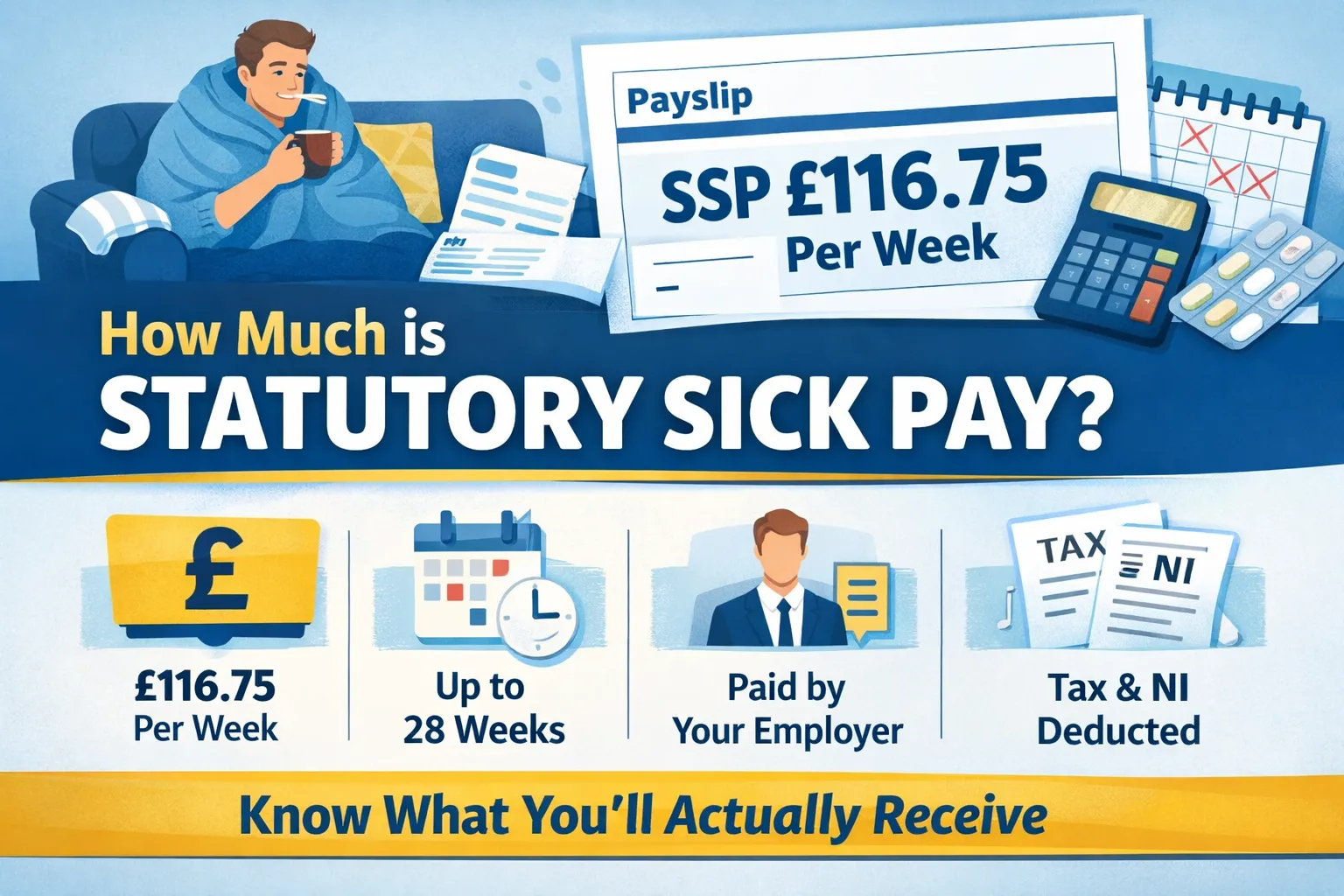
As of the current tax year, Statutory Sick Pay (SSP) is £116.75 per week (gross).
- It can be paid for up to 28 weeks.
- It’s paid by your employer.
- And yes, it’s taxable.
Now let’s slow down and walk through what that actually means for you.
What Is Statutory Sick Pay (SSP)?
Statutory Sick Pay is the legal minimum your employer must pay if you’re too ill to work.
It isn’t a benefit you claim directly from the government. It comes through your employer’s payroll, just like your regular wages.
It exists for one simple reason: if you’re employed and temporarily unwell, you shouldn’t immediately lose all income.
But, and this is important, it’s not full salary replacement. It’s a fixed weekly amount set by the government. Employers can offer more (that’s called occupational or company sick pay), but they cannot legally offer less if you qualify.
SSP applies whether your illness is physical or mental. It applies if you’re off with the flu, recovering from surgery, signed off for stress, or managing a long-term health condition.
The system isn’t emotional. It’s structured. Which is why understanding the structure matters.
Who Qualifies for Statutory Sick Pay?
Not everyone does. And this is where confusion begins.
To qualify, you must:
- Be classed as an employee
- Earn at least £123 per week (before tax) on average
- Be off sick for at least 4 consecutive days (including non-working days)
- Have notified your employer correctly
Let’s unpack that.
Employee status
You must be working under a contract. Agency workers usually qualify. Zero-hours workers can qualify if they meet earnings requirements.
Minimum earnings
If you earn less than £123 per week on average, you won’t qualify for SSP. That average is calculated over an 8-week “relevant period.”
The 4-day rule
SSP only kicks in if you’re sick for at least four consecutive days. Those days can include weekends and non-working days.
28-week limit
You cannot receive SSP for more than 28 weeks in a rolling period.
Multiple jobs
If you have two jobs and meet the earnings threshold in both, you can receive SSP from both employers.
Here’s a quick self-check:
- Are you employed?
- Do you earn £123+ weekly on average?
- Have you been off sick 4+ consecutive days?
If yes to all three, you likely qualify.
How Much Is Statutory Sick Pay and How Do You Calculate It?
Here’s where clarity matters most.
The weekly rate is £116.75.
But you rarely receive a neat weekly block of money. Payroll works in days.
Step 1: Understand “waiting days”
The first 3 qualifying days are unpaid. These are called waiting days.
You only get paid from the 4th qualifying day onward.
Step 2: Calculate daily rate
Employers divide the weekly SSP rate by your “qualifying days”, the days you normally work.
If you work 5 days per week:
£116.75 ÷ 5 = £23.35 per day
If you work 3 days per week:
£116.75 ÷ 3 = £38.92 per day
Real-Life Examples
Example 1: Full-time worker off for 2 weeks
- Works 5 days per week
- Sick for 10 working days
- First 3 days unpaid
- Paid for 7 days
7 × £23.35 = £163.45 (gross)
Example 2: Part-time worker (3 days/week) off for 6 working days
- First 3 qualifying days unpaid
- Paid for 3 days
3 × £38.92 = £116.76 (gross)
Example 3: Off for 10 weeks
10 weeks × £116.75 = £1,167.50 (gross)
Minus tax and National Insurance where applicable.
SSP is taxable income. That means deductions may apply depending on your overall earnings.
And here’s the part most articles gloss over: your take-home amount may feel noticeably smaller than the headline rate.
How Long Can You Get Statutory Sick Pay?
The maximum is 28 weeks.
That’s it.
If your illness continues beyond 28 weeks, your employer stops SSP payments. At that stage, you may need to apply for:
- Employment and Support Allowance (ESA)
- Universal Credit
There’s also something called “linked periods of sickness.” If you’re off sick again within 8 weeks of a previous sickness period, the days can link together, meaning waiting days may not apply again.
The system keeps track of patterns, not just isolated events.
When Does SSP Start? (Waiting Days Explained Clearly)
The first three qualifying days are unpaid.
These are only waived if:
- You’ve had a linked sickness period within 8 weeks
- Your employer offers enhanced sick pay
Qualifying days are the days you normally work, not necessarily Monday to Friday.
If you work weekends, those count.
If you only work Tuesdays and Wednesdays, only those days count. This distinction matters because it affects how much you’re actually paid.
Do You Pay Tax on Statutory Sick Pay?
Yes.
SSP is treated like normal earnings.
That means:
- Income tax may apply
- National Insurance contributions may apply
- Pension contributions may still be deducted
If your earnings drop significantly while on SSP, you might pay less tax overall. But it depends on your annual income.
If you receive Universal Credit, your SSP payments can affect the amount you’re entitled to.
It’s income. Which means it counts.
SSP vs Company Sick Pay: What’s the Difference?
Statutory Sick Pay is the legal minimum.
Company sick pay (also called occupational sick pay) is extra, and entirely dependent on your employment contract.
Some employers offer:
- Full pay for a limited period
- Half pay after full pay ends
- Enhanced sick leave policies
If your employer offers company sick pay, they must still meet at least the statutory minimum.
Check your contract. Or your employee handbook. Or ask HR directly.
Never assume the statutory rate is all you’re entitled to.
What Happens If You Don’t Qualify?
If you earn below the threshold, are self-employed, or have already received 28 weeks of SSP, you may need to look elsewhere.
Your employer should give you an SSP1 form explaining why you’re not eligible.
From there, you can apply for:
- New Style Employment and Support Allowance
- Universal Credit
Self-employed workers do not receive SSP. Their support system works differently.
If you’ve been refused SSP and believe you qualify, raise it in writing with your employer first.
Step-by-Step: How to Claim Statutory Sick Pay
- Inform your employer as soon as possible
- Follow their reporting procedure
- Provide a self-certification for the first 7 days
- Get a GP fit note after 7 days
- Ensure payroll has processed your absence
If your employer says you don’t qualify, request form SSP1.
Keep records. Dates matter.
The Bottom Line
Statutory Sick Pay is currently £116.75 per week, paid for up to 28 weeks, subject to tax, and only after three unpaid waiting days.
It isn’t generous. It isn’t flexible. But it is a legal entitlement if you meet the criteria.
If you came here asking how much is statutory sick pay, now you know the number, and more importantly, how that number translates into real money in your account.
When you’re unwell, clarity is currency.
FAQs
Can you get SSP on a zero-hours contract?
Yes, if you meet the earnings threshold.
Can SSP cover mental health leave?
Yes. A GP fit note for stress, anxiety, or depression qualifies.
Does SSP include weekends?
Only if weekends are qualifying working days for you.
Can your employer refuse SSP?
Only if you don’t meet eligibility criteria.
Can you get SSP from two jobs?
Yes, if you qualify separately with each employer.
Can you get SSP during pregnancy?
Yes, if the sickness is unrelated to maternity leave timing rules.
Is SSP automatic?
No. You must notify your employer correctly.
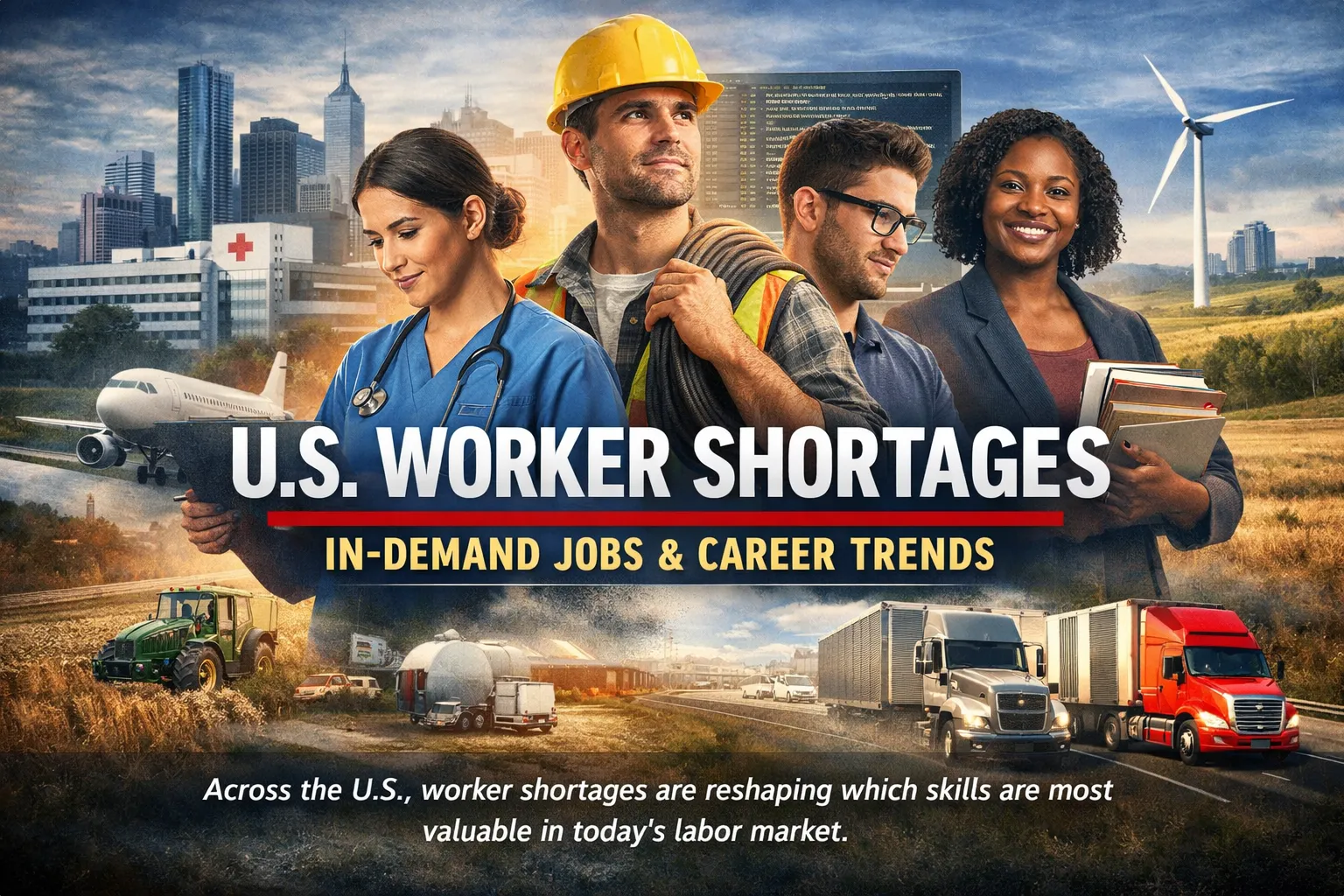
Something unusual is happening in the American labor market. Jobs are open. Paychecks are ready. And yet, employers can’t find enough people to do the work.
In policy briefings and boardrooms, this challenge is often summarized by a term that sounds bureaucratic but carries real-life consequences: shortage occupation list. Strip away the jargon and what it really signals is this, entire parts of the U.S. economy are running short on skilled humans.
This isn’t about one industry having a bad hiring year. It’s about structural shifts: an aging workforce, fast-moving technology, geographic mismatches, and an education system that hasn’t kept pace with how work has changed. The result is a growing gap between the jobs America needs filled and the workers prepared to fill them.
For students choosing a major, mid-career professionals weighing a pivot, immigrants navigating work pathways, or employers trying to plan five years ahead, understanding where shortages exist is no longer optional. It’s strategic intelligence.
This guide is designed to be practical, not theoretical. No breathless predictions. No hollow optimism. Just a grounded look at why these shortages exist, where they are most acute, and how real people can respond with clarity and confidence.
What Is the Shortage Occupation List in the United States?
Here’s the first truth most articles skip: the United States does not maintain a single, universal list of shortage occupations.
Instead, what people casually refer to is a patchwork of data sources, federal labor statistics, state workforce agencies, industry reports, and employer surveys, that collectively identify roles where demand persistently outpaces supply.
This matters because shortages are local before they are national. A role in critical demand in rural Arizona may be relatively balanced in suburban New Jersey. Healthcare and education shortages, for example, often vary more by zip code than by job title.
Another layer of confusion comes from intent. Some lists are built to guide funding for training programs. Others exist to inform immigration decisions. Still others help states decide where to offer tax incentives or licensing flexibility.
So rather than thinking of a single authoritative document, it’s more accurate to think of a signal system. When multiple independent sources point to the same roles struggling to attract qualified workers year after year, a shortage becomes hard to ignore.
For readers, this distinction is empowering. It means you’re not looking for a static list, you’re learning how to read the labor market itself.
Why Do Occupational Shortages Exist in the U.S.?
Workforce shortages rarely have a single cause. They’re the result of several slow-moving forces colliding at once.
Demographics are the most obvious. Baby Boomers are retiring in large numbers, taking decades of experience with them. In many fields, there simply aren’t enough younger workers entering fast enough to replace them.
Then there’s the skills mismatch. The economy has shifted toward technical, analytical, and care-based roles, but education pathways haven’t always followed. We still graduate far more people for oversupplied fields than for those quietly desperate for talent.
Geography adds another wrinkle. Jobs don’t move easily; people do. But housing costs, licensing rules, and family ties make relocation harder than economic models assume.
Finally, there’s perception. Some careers, especially in trades, caregiving, and education, have been undervalued culturally, even as their economic importance has grown.
Put together, these forces create gaps that don’t close quickly. And that’s why shortages tend to persist for years, not months.
What These Shortages Mean for American Workers
For U.S. workers, occupational shortages are not just a policy concern, they’re leverage.
When employers struggle to hire, power subtly shifts. Hiring timelines shorten. Training budgets expand. Employers become more flexible about credentials, schedules, and career pathways.
Shortage roles also tend to be more recession-resistant. When the economy tightens, employers hold onto workers they know are hard to replace.
This doesn’t mean every high-demand job is glamorous or easy. But it does mean the odds tilt slightly in favor of the worker, something that hasn’t always been true in recent decades.
For those willing to align skills with demand, shortages create a rare opportunity: stability in an unstable world.
What These Shortages Mean for Immigrants and Work Visas
For immigrants, labor shortages play a different but equally important role.
When U.S. employers cannot find domestic workers, they’re more likely to pursue international talent. Shortage evidence strengthens the case that hiring a foreign worker is a necessity, not a convenience.
Healthcare, engineering, technology, and certain trades consistently show up in this context because the training pipelines are long and the stakes are high. Employers can’t simply “wait it out.”
That said, shortages are not shortcuts. They don’t erase visa requirements or guarantee approval. They do, however, make the economic argument clearer and more credible.
For immigrants planning their careers, aligning skills with persistent U.S. shortages can reduce uncertainty and improve long-term prospects.
Major Occupational Shortage Categories in the U.S.
Healthcare and Medical Roles
Demand here is driven by demographics. As Americans live longer, they require more care, often for chronic conditions that demand ongoing human attention. Nurses, primary care physicians, mental health professionals, and home health aides remain difficult to replace, even with technology.
Technology and STEM
Digital infrastructure underpins nearly every industry. Software development, cybersecurity, data analysis, and cloud architecture remain areas where demand grows faster than training pipelines.
Midway through this discussion, it’s worth naming the framework many readers search for, the shortage occupation list, because these fields appear repeatedly across federal data, state reports, and employer surveys, even if the terminology varies.
Skilled Trades and Construction
Electricians, plumbers, HVAC technicians, and construction managers are essential to housing, infrastructure, and energy transitions. Retirement rates here are especially high, while entry rates remain stubbornly low.
Education and Childcare
Teacher shortages, particularly in special education and STEM subjects, reflect burnout, compensation challenges, and rising expectations. Childcare shortages ripple outward, affecting workforce participation across the economy.
Transportation and Logistics
From truck drivers to aircraft mechanics, these roles keep supply chains moving. Training requirements are specific, and turnover is costly, both factors that sustain shortages.
Agriculture and Essential Services
Food doesn’t grow itself. Seasonal labor, processing roles, and equipment specialists remain chronically understaffed, especially in regions dependent on domestic production.
Why State-Level Differences Matter
A job “in shortage” nationally may be well supplied in one state and scarce in another.
States with aging populations face healthcare gaps sooner. Fast-growing states struggle to staff schools and infrastructure. Rural areas often experience shortages years before urban centers do.
Understanding these nuances can change career outcomes. Location, in this context, is not a footnote, it’s a variable.
Using Shortage Data for Smarter Career Planning
The smartest career moves today are not about chasing trends. They’re about reading signals.
Start with transferable skills. Identify which high-demand roles value them. Then look honestly at the cost, time, money, energy, required to close any gaps.
Shortages reward preparation, not impulsiveness. The goal is alignment, not panic.
Common Myths About Occupational Shortages
Shortage does not mean “low skill.” It does not mean “low pay.” And it certainly does not mean “easy.”
Most persistent shortages exist precisely because the work is demanding, regulated, or emotionally complex.
The myth worth abandoning is the idea that opportunity should be effortless. In reality, opportunity tends to be earned where few are willing to prepare.
Will These Shortages Disappear?
Some gaps will narrow. Others won’t.
Automation will reshape tasks, but many roles, especially those involving care, judgment, and skilled hands, resist replacement.
Demographic momentum alone suggests many shortages will deepen before they ease.
Final Thoughts:
Careers have always been shaped by timing as much as talent. Today, timing favors those who understand where demand is structural, not seasonal.
The idea behind a shortage occupation list isn’t to funnel everyone into the same jobs. It’s to illuminate where society’s needs and individual opportunity intersect.
In the final analysis, this isn’t about chasing security, it’s about choosing relevance. When your skills meet a genuine need, work becomes more resilient, more valued, and more sustainable.
And in a labor market defined by change, that clarity may be the most valuable asset of all.

Pakistan National Cricket Team vs South Africa National Cricket Team Match Scorecard

What Is ParentPay? A Simple Guide for Parents

Is CenturyLink Email Still Safe in 2026? Security Risks, Setup & Best Alternatives

Can Your Boss Deny Your PTO in California? What State Law Really Allows You finally did it. You checked your calendar. You checked your PTO balance. You submitted

How to Set Up an LLC in Illinois: Step-by-Step Guide for 2026

How to File Response to Eviction Summons Idaho: A Step-by-Step Guide for Tenants


-
 Law9 years ago
Can Your Boss Deny Your PTO in California? What State Law Really Allows You finally did it. You checked your calendar. You checked your PTO balance. You submitted
-
 Law9 years ago
How to Set Up an LLC in Illinois: Step-by-Step Guide for 2026
-
 Law9 years ago
How to File Response to Eviction Summons Idaho: A Step-by-Step Guide for Tenants
-

 Law9 years ago
Affordable Lawyers in Texas That Write a Demand Letter Cheap: Your Complete Guide
-

 Sports9 years ago
Best Choke for Dove Hunting (Opening Day, Early & Late Season)
-

 Law9 years ago
U.S. Passport Renewal Guide 2026: What to Do, When to Apply, and What to Avoid
-

 Law11 months ago
Can You Set Up a Trust Without an Attorney in the US? | A Comprehensive Guide
-

 Law9 years ago
How Much Can a Landlord Charge for a Security Deposit in the USA?