
Visa and Passport Guides
Irish Citizenship by Descent Explained: Who Qualifies and How It Really Works

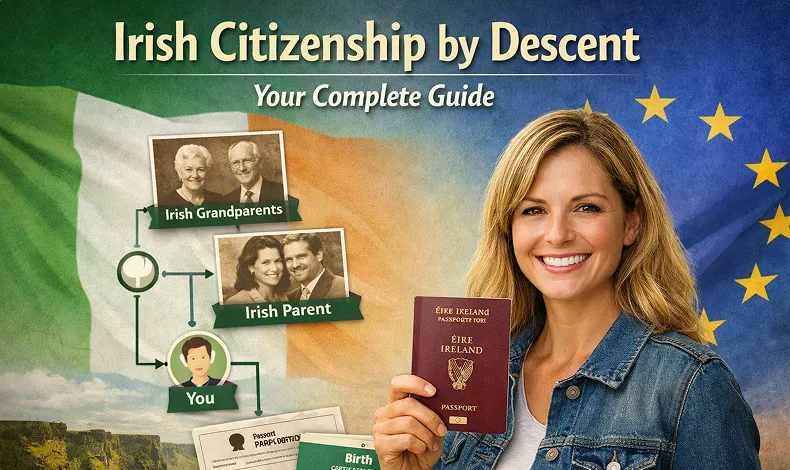
If you have Irish family history, you may already be closer to an EU passport than you think. Every year, thousands of people search for Irish citizenship by descent because a parent or grandparent was born on the island of Ireland. For many, this path is not about moving tomorrow, but about securing long-term options: living in Europe, working without visas, or passing citizenship to future children.
This guide is written to give you clear answers, not legal language. You will learn who qualifies, how the process works, what documents you really need, how long it takes, and what mistakes to avoid. By the end, you should know exactly where you stand and what your next step is.
What is Irish Citizenship by Descent?
Irish citizenship by descent means you can become an Irish citizen because of your family line, not because you lived in Ireland. The right comes from Irish nationality law, which recognizes strong ties between Ireland and its global diaspora.
There are three main ways people become Irish citizens:
- By birth (born in Ireland to qualifying parents)
- By descent (parent or grandparent connection)
- By naturalization (living in Ireland for a required number of years)
Descent-based citizenship is the most common route for people living abroad. It usually requires registration in the Foreign Births Register (FBR). Once registered, you are legally an Irish citizen from the date of registration, not before.
This system exists to make sure citizenship passes in an organized and documented way across generations.
Who is Eligible for Irish Citizenship Through Descent in 2026?
This section is the most important part of the article. Eligibility depends on how close your Irish-born ancestor is to you.
If Your Parent Was Born in Ireland
If one of your parents was born in Ireland, you are automatically an Irish citizen.
You do not need to apply for the Foreign Births Register. You can usually go straight to applying for an Irish passport, once you collect the correct documents.
If Your Grandparent Was Born in Ireland
This is the most common situation.
If your grandparent was born in Ireland:
- You are eligible
- You must apply through the Foreign Births Register
- Your parent does not need to be an Irish citizen already
Once your registration is approved, you become an Irish citizen.
If Your Great-Grandparent Was Born in Ireland
This is where many people get confused.
You can only qualify through a great-grandparent if your parent was registered on the Foreign Births Register before you were born. If that did not happen, the chain is broken, and you cannot apply based on that ancestor.
When You Do Not Qualify
You are not eligible if:
- Your only Irish connection is beyond a great-grandparent
- Your parent registered after your birth
- You cannot provide official documents to prove the family link
Understanding this early can save you time and money.
How the Foreign Births Register Works
The Foreign Births Register is an official record kept by the Irish government. It exists for people who were born outside Ireland but have the right to citizenship through ancestry.
When you apply:
- Your birth is recorded in the register
- You become an Irish citizen on the date of registration
- You can then apply for an Irish passport
The register is managed by the Department of Foreign Affairs. Applications are processed in the order they are received.
Processing times can be long, but once approved, your citizenship is permanent.
Step-by-Step Application Process for Irish Citizenship
This process is detailed, but manageable if you stay organized.
Step 1: Confirm Your Eligibility
Check whether your parent or grandparent was born in Ireland and confirm the generation rules explained earlier.
Step 2: Gather All Documents
You must prove every link in the family chain using official records.
Step 3: Complete the Online Application
You fill out the application form online and pay the required fee.
Step 4: Witness and Certify Documents
Certain documents must be witnessed by an approved professional, such as a lawyer or notary.
Step 5: Submit the Application
You send physical documents by post. Originals are usually required.
Step 6: Wait for Processing
This is the longest part. You may wait many months before a decision is made.
Required Documents: What You Actually Need
You will need documents for three generations in most cases.
Documents for You (the Applicant)
- Full birth certificate
- Government-issued photo ID
- Proof of address
- Passport-sized photos
Documents for Your Parent
- Full birth certificate
- Marriage certificate (if applicable)
- Photo ID or death certificate
Documents for Your Irish-Born Grandparent
- Irish birth certificate
- Marriage certificate (if applicable)
- Death certificate (if applicable)
All documents must match names exactly. Even small spelling differences can cause delays.
Timeline: How Long the Process Takes
Processing times change depending on demand. On average:
- Most applications take 12 to 24 months
- Incomplete applications take longer
- There is no fast-track option
The best way to avoid delays is to submit a complete and accurate application from the start.
Cost Breakdown of Getting Citizenship of Ireland
Here is a realistic overview of costs:
- Adult FBR application fee
- Lower fee for children
- Costs for certified copies and translations
- Passport application fee (separate step)
Most applicants spend a few hundred euros in total, depending on document availability.
Passing Irish Citizenship to Your Children
This part is very important for families planning ahead.
- If you become an Irish citizen before your child is born, your child may automatically be a citizen
- If your child is born before you register, they are not automatically eligible
Timing matters. Many people apply mainly to protect future generations.
Irish Citizenship vs Irish Passport – What’s the Difference?
Citizenship and a passport are not the same thing.
- Citizenship is a legal status
- A passport is a travel document
You must become a citizen first. Only after that can you apply for a passport.
Benefits of Being an Irish Citizen
Irish citizenship gives you:
- The right to live and work in Ireland
- The right to live and work in all EU countries
- Access to EU education opportunities
- Visa-free travel to many countries
- The ability to hold dual citizenship in most cases
These benefits apply even if you never live in Ireland.
Common Mistakes That Cause Delays or Refusals
Some common problems include:
- Missing documents
- Using short-form birth certificates
- Incorrect witnesses
- Name differences not explained
- Sending damaged originals
Careful preparation reduces risk.
Final Summary and Next Steps
Irish citizenship through family connection is one of the most generous systems in Europe, but it follows strict rules. If your parent or grandparent was born in Ireland, you may already qualify. The key is understanding eligibility, preparing documents carefully, and being patient during processing.
For many people, Irish citizenship by descent is not just about a passport. It is about identity, opportunity, and long-term security for future generations. If you believe you qualify, the best next step is to start gathering documents and confirming your family records today.
Frequently Asked Questions
Do I need to live in Ireland?
No. Residency is not required.
Does Northern Ireland count?
Yes. Birth in Northern Ireland qualifies.
Can I apply from the US, UK, or Australia?
Yes. Most applicants live outside Ireland.
Is there an age limit?
No. Adults and children can apply.
What if my parent never applied?
You can still apply if your grandparent was born in Ireland.


The best countries to live in are attracting more Americans than ever. High living costs in the United States, expensive healthcare, and remote work flexibility push many people to explore life overseas. Rent in US cities often exceeds $2,000 per month, while similar apartments abroad can cost half that. Healthcare abroad is frequently cheaper and simpler. Many expats report better work-life balance and stronger savings.
This guide ranks destinations using real data and expat experiences. You will see practical comparisons, visa tips, and lifestyle insights so you can decide if moving abroad makes sense.
Why the Best Countries to Live In Are Luring Americans
What Americans Are Facing at Home
Living in the US can be expensive. Housing prices have climbed above $420,000 on average. Medical bills surprise families even with insurance. Political stress and long work hours also affect quality of life.
After COVID-19, remote work became normal. Millions of employees now work from laptops. If you can work from anywhere, why not choose a country where your money stretches further? That question drives the modern expat movement.
Criteria for Ranking the Best Countries For Residence
We evaluated destinations using these factors:
- Cost of living (30%)
- Safety and visa ease (20%)
- Healthcare quality (20%)
- English-speaking community (15%)
- Lifestyle perks (15%)
Data sources include Numbeo’s Cost Index, the Global Peace Index, and expat surveys.
1. Portugal: A Top Choice Among the Best Countries
Portugal consistently ranks among the best countries to settle in for retirees and remote workers. Lisbon apartments cost about $1,200 per month, far less than US coastal cities. Public transportation and walkable neighborhoods reduce daily expenses.
Healthcare is affordable and high quality. Many expats pay $40–$60 per doctor visit. Private insurance costs around $80 per month.
The D7 visa allows retirees and remote workers to reside with proof of income. English is widely spoken in major cities.
Crowds in tourist areas and rising rents in Lisbon are potential downsides.
2. Mexico: Close and Affordable
Mexico remains one of the best countries for Americans seeking proximity and savings. Flights from Texas and California are short and inexpensive. In cities like Mérida, monthly costs can stay under $1,200.
Large expat communities exist in Puerto Vallarta and San Miguel de Allende. Safety varies by region, so researching neighborhoods is important.
Healthcare is affordable through the IMSS system, and private clinics offer high-quality care at low prices.
3. Thailand: Digital Nomad Favorite
Thailand attracts remote workers for affordability and lifestyle. Chiang Mai costs roughly $1,000 per month. Street meals can cost under $2.
Private hospitals in Bangkok provide world-class care. English is common in tourist areas. Visa options include the Elite Visa and emerging digital nomad programs. Humidity and monsoon seasons require adjustment.
Why These Are Truly the Best Countries
The phrase best countries to settle in means different things to different people. For some, it is about saving money. For others, it is about safety or adventure. Countries like Portugal and Spain offer European culture and excellent healthcare. Nations like Thailand and Malaysia provide low costs and modern infrastructure.
Remote work has expanded choices. If your income comes from online clients or a US employer, you can earn in dollars while spending less abroad. This financial advantage is why so many Americans now explore life overseas.
4. Costa Rica: Nature and Simplicity
Costa Rica ranks among the best countries for nature lovers. The “Pura Vida” lifestyle emphasizes relaxation and community. Families often report lower stress and more time outdoors.
A couple can live comfortably for about $2,000 per month outside tourist zones. The CAJA public healthcare system provides universal coverage, while private care remains affordable.
The Rentista visa allows residency with proof of steady income. Rainy seasons and infrastructure in rural areas can be challenges.
5. Spain: Culture and Healthcare Excellence
Spain remains one of the best countries to settle in for culture and public healthcare. Valencia and Andalusia offer lower living costs than Barcelona or Madrid. Monthly expenses around $1,900 are common.
Spain’s healthcare system ranks highly in Europe. Public services are often free or low cost.
The Non-Lucrative Visa allows retirees with savings to reside without working locally. Bureaucracy can be slow, so patience helps.
Last Thoughts
The best countries to live in offer more than financial savings. They provide new perspectives, diverse cultures, and opportunities to design a life that fits your goals. Whether you choose Europe, Latin America, or Asia, careful planning makes the transition easier.
Portugal stands out for balance and affordability. Mexico offers proximity and community. Thailand delivers value for digital nomads. Costa Rica emphasizes nature and wellness. Spain combines culture with strong public services.
Moving abroad is not for everyone, but millions of Americans find success and happiness overseas.
Your next adventure could begin with a single flight.
If you are exploring options, research visas and visit potential destinations first. Many countries allow long stays so you can experience life before committing.
The best countries are waiting. Plan wisely and explore with an open mind.

Maria from Cebu met David from California during his short vacation in the Philippines. They stayed in touch every day. After one year of visits, calls, and family meetings, they decided to marry in the United States. Their first question was simple: what documents are needed for a fiance visa?
This question is more important than many couples think. In 2026, the K-1 visa process is strict. Missing papers, weak proof of relationship, or financial mistakes can cause delays of many months. Current processing time is around 6–12 months, and the Form I-129F filing fee is $535.
The good news? Around 80% of well-prepared cases are approved. The key is document accuracy and strong evidence.
In this complete guide, you will learn the full fiancé visa documents list, updated 2026 requirements, interview tips, and common mistakes to avoid.
What Documents Are Needed for a Fiancé Visa? Understanding the K-1 Basics
The K-1 visa allows a foreign fiancé(e) of a US citizen to enter the United States for marriage. After arrival, the couple must marry within 90 days.
Only US citizens can sponsor this visa. Green card holders cannot use the K-1 process.
After marriage, the foreign spouse files Form I-485 to adjust status and receive a green card.
Who Qualifies in 2026?
To qualify for a K-1 visa this year, you must meet these rules:
- US Citizen Sponsor
- Must be a US citizen
- At least 21 years old
- Proof of citizenship required (passport or birth certificate)
- In-Person Meeting Requirement
You must have met in person at least once within the last 2 years.
If you visited the US using a tourist visa (B1/B2), that meeting counts. Keep entry stamps, boarding passes, and photos. - Legal Ability to Marry
Both partners must be single, divorced, or widowed. Divorce decrees are required if previously married. - Financial Requirement
The sponsor must earn about $23,000 per year (for a household of two in 2026).
Applicants come from many countries, including Mexico, India, Canada, the UK, and the Philippines. The rules are the same worldwide.
K-1 vs CR-1 Spouse Visa
| Feature | K-1 Fiancé Visa | CR-1 Spouse Visa |
| Marriage status | Not married | Already married |
| Entry timing | Before marriage | After marriage |
| Marriage deadline | 90 days | Not required |
| Work permit | Apply after arrival | Automatic upon entry |
| Processing time | 6–12 months | 10–16 months |
If you want to marry inside the US, the K-1 is usually the better choice.
Full K-1 Application Timeline
The K-1 process has three main steps.
Step 1 – I-129F Filing with USCIS
The US citizen files:
- Form I-129F
- Form G-1145 (for notifications)
- Passport-style photos
- Proof of citizenship
- Proof of relationship
- $535 filing fee
After submission:
- NOA1 (receipt notice)
- NOA2 (approval notice, usually 8–10 months later in 2026)
Tip: During visits, take many photos and save travel receipts.
Step 2 – NVC and Embassy Processing
After USCIS approval, the case goes to the National Visa Center.
The fiancé must:
- Complete DS-160 online
- Pay $265 visa fee
- Schedule medical exam ($300–$500)
- Prepare civil documents
This stage takes about 1–2 months.
Step 3 – Embassy Interview
Bring originals of all documents:
- Passport
- Birth certificate
- Police certificates
- Medical results
- Relationship proof
- Sponsor’s financial documents
If approved, the visa is valid for 6 months to enter the US.
2026 Cost Overview
| Stage | Cost |
| I-129F Filing | $535 |
| Embassy Fee | $265 |
| Medical Exam | $300–$500 |
| Adjustment of Status | $1,440 |
| Total average cost | $2,500–$3,000 |
What Documents Are Needed for a Fiancé Visa?
Here is the detailed list every couple should prepare.
Proof of Relationship
Strong evidence includes:
- 20+ photos together (different dates and locations)
- Chat screenshots (at least 1 year history)
- Call logs
- Flight tickets and boarding passes
- Hotel bookings
- Engagement proof (if available)
- Written statements from both partners
Create a simple timeline showing:
- First meeting
- Engagement
- Family introductions
Clear organization helps officers understand your story.
Sponsor Financial Documents
The sponsor must submit Form I-134 (Affidavit of Support).
Required papers:
- Last 3 years tax returns
- W-2 forms
- 3 recent pay stubs
- Employment letter
- Bank statements
Minimum income: about $23,000 per year for two people.
Unlike spouse visas, co-sponsors are harder to use in K-1 cases.
Personal Identity Documents
The foreign fiancé must prepare:
- Valid passport
- Birth certificate
- Divorce decree (if applicable)
- Police certificates from countries lived in for 6+ months
- Military records (if any)
- 2 passport photos
Scan everything in color PDF format and keep copies.
Top Document Mistakes and Fixes
Weak Evidence
Problem:
- Few photos
- No long chat history
- No travel proof
Fix:
- Add dated screenshots
- Organize photos by timeline
- Include entry stamps and boarding passes
Low Income Issues
If income is below requirement:
- Show savings
- Provide stable job contract
- Add proof of future employment
Income problems are common reasons for delays.
Tourist Visa Overstay
Overstaying a US tourist visa can create 3- or 10-year bans. Always follow visa rules before starting a K-1 case.
Interview Preparation
Dress neat and professional.
Common questions:
- When did you meet?
- How many times did you visit each other?
- What does your fiancé do for work?
- Where will you live?
Answer honestly and calmly.
Visa Interview and After Approval
Medical Exam
The exam includes:
- Physical check
- Blood test
- Chest X-ray
- Vaccination review
Bring vaccination records to avoid extra costs.
After Entry to the US
- Enter within 6 months
- Marry within 90 days
- File Form I-485 ($1,440)
- Apply for work permit
The 90-day rule cannot be extended.
Final Thoughts
Now you clearly understand what documents are needed for a fiance visa? The answer is simple: strong relationship proof, correct financial records, and complete identity papers. Most refusals happen because couples do not organize their documents well.
If you prepare early, follow the checklist carefully, and stay honest in your interview, your chances are high. Start your I-129F process as soon as possible, especially with current 2026 backlogs. Careful planning today can bring you together in the United States tomorrow.
FAQs
Can children apply?
Yes. Unmarried children under 21 can apply as K-2 dependents.
Is one meeting enough?
Yes legally, but more visits are stronger.
Are digital screenshots allowed?
Yes, if dates and names are clear.
Do we need a lawyer?
Not required, but helpful in complex cases.
Visa and Passport Guides
Spain Golden Visa 2026: Is the €500K Property Path Still Worth It for Americans?

Are you thinking about moving to Spain? Many Americans dream about living in a sunny country with beaches, good food, and a relaxed lifestyle. Imagine a family from California flying to Madrid. They buy a villa for €500,000. Soon after, they receive Spanish residency cards. Now they can travel easily to France, Italy, or Germany without applying for new visas each time.
But is this still possible in 2026?
Yes, the Spain Golden Visa program is still active in 2026. However, the government has discussed possible changes. Some politicians want to increase the minimum investment or limit property purchases. As of March 2026, the main rule remains the same: invest at least €500,000 in Spanish real estate to qualify.
This guide explains everything in clear and simple English. You will learn who qualifies, what investment options exist, what documents you need, and how to apply from the United States. We also share real examples, such as Mike from Florida, who received approval in 40 days.
The Golden Visa allows you to live in Spain, travel across the Schengen Area, and include your family. You do not need to live in Spain full-time. You only need to visit at least once per year to renew your residency.
Many investors earn rental income from their property. In popular cities like Madrid, Barcelona, and Málaga, rental returns often range from 4% to 7% per year.
This article is updated with 2026 information to help you understand if the €500K property option is still worth it.
What Is Spain’s Golden Visa in 2026?
The Spain Golden Visa is a residency program for non-EU citizens who invest in Spain. Americans qualify because the United States is not part of the European Union.
If you invest at least €500,000 in Spanish property, you can apply for residency. Other options require higher investments, such as €1 million in a bank deposit or company shares, or €2 million in government bonds.
After approval, you can live, work, and study in Spain. You can also travel to 27 Schengen countries without extra visas. You do not need to stay in Spain the whole year. Visiting once per year is usually enough to keep your residency active.
Your close family members can apply with you. This includes:
- Your spouse
- Children under 18
- Dependent children over 18
- Dependent parents over 65
History and Recent Changes
Spain started the Golden Visa program in 2013. Since then, more than 15,000 investors worldwide have received residency. Americans are one of the largest groups of applicants, with around 5,000 approvals.
In 2025, the Spanish government discussed ending the real estate option because many homes were being bought by foreign investors. Some leaders argued this increased housing prices for locals. However, in early 2026, the property route is still available.
The minimum property investment remains €500,000. There have been no official increases yet.
Rental yields in major cities remain strong. For example, a €500,000 apartment in Madrid may rent for about €24,000 per year. After taxes and expenses, the owner might keep around €18,000.
The first residence permit is valid for two years. After that, you can renew for five years. You must show that you still own the investment.
After ten years of legal residence, you may apply for Spanish citizenship. You must pass a basic Spanish language test at A2 level and a culture exam.
For example, Sarah from Texas bought a home in Costa del Sol in 2025. Her children now attend public schools in Barcelona without tuition fees. Her rental income helps cover yearly costs.
Who Qualifies? Requirements for US Citizens
Most U.S. citizens meet the basic conditions if they have enough funds and a clean background.
Main requirements:
- Be at least 18 years old
- Have no serious criminal record
- Have private health insurance in Spain
- Make a qualifying investment
- Prove you can financially support yourself and your family
There is no maximum age limit. Many retirees use this program.
Age, Criminal Record, Health, and Insurance
Age: You must be 18 or older.
Criminal record: You need an FBI background check. It costs about $50 and usually takes 10–14 days. The document must receive an apostille from the U.S. Department of State.
Health insurance: You must buy private Spanish health insurance with no co-pay. Minimum coverage should be around €30,000 per person.
Proof of funds: You must show about €2,400 per month for the main applicant and €600 per month per child. Provide bank statements from the last 6 months.
Here is a simple overview:
| Requirement | Details for Americans | Why It Matters |
| Investment | €500K property or higher option | Shows serious commitment |
| Criminal Record | FBI check with apostille | Proves good character |
| Health Insurance | Private Spanish policy | Required for residency |
| Financial Means | €2,400/month main applicant | Shows self-support |
| Family Proof | Marriage and birth certificates | Allows family inclusion |
A common mistake is forgetting to include children’s birth certificates with apostilles.
Best Ways to Invest for the Golden Visa
About 80% of applicants choose real estate. It is the most popular and practical option.
€500K Real Estate Option
You can buy:
- An apartment
- A villa
- Commercial property
- Land
You must invest at least €500,000 of your own money. You can use a mortgage for any amount above €500,000.
Popular areas:
- Madrid (around 5% rental yield)
- Barcelona (strong tourism market)
- Málaga (beach demand)
- Valencia (lower prices)
Example: A €550,000 villa in Alicante rents for €2,000 per month. After expenses, the owner may keep about €1,500 monthly.
Property purchase taxes are usually about 10%.
€1M Funds or €2M Bonds
You can place €1 million in a Spanish bank for at least five years. Interest rates are low, around 1%.
Government bonds require €2 million. They are considered safe but need more capital.
Business or Startup Investment
You may invest €1 million in a Spanish company or create a business that provides jobs. This option requires a detailed business plan.
If you transfer large amounts of money abroad, remember U.S. tax rules. If you hold more than $10,000 in foreign accounts, you must file an FBAR form with the IRS.
Complete Application Checklist
Prepare all documents before applying. Documents in English usually do not need translation, but official certificates must have an apostille.
Proof of Investment
For property:
- Notarized property deed
- Bank transfer confirmation
- Land registry certificate
For bank deposit:
- Official certificate from Spanish bank
Personal and Family Documents
You need:
- Valid U.S. passport (at least one year validity)
- Passport photos (white background)
- Birth certificates (apostilled)
- Marriage certificate (if applicable)
- Private health insurance policy
- FBI criminal record with apostille
- Bank statements (3–6 months)
- Tax returns or salary proof
- Completed EX-01 application form
- Power of attorney (if using lawyer)
For children:
- Birth certificate
- School documents if required
For dependent parents:
- Medical certificate showing dependency
Lisa from Florida forgot to include her insurance policy at first. Her application was delayed by one month.
Government application fee is about €80. Fingerprinting costs around €15.
Step-by-Step Guide to Apply from the USA
You can apply through a Spanish consulate in the U.S. or from Spain while visiting as a tourist.
Most Americans choose the consulate method.
Spanish consulates are located in cities such as:
- Miami
- New York
- Los Angeles
- Houston
Consulate vs. Applying in Spain
Applying through a consulate is safer because you submit documents before traveling.
Applying inside Spain is possible within 90 days of arrival, but mistakes can create problems.
Fees and Timelines
Government fees are usually under €100. Legal fees may range from €3,000 to €5,000.
Processing time is typically 20 to 60 days.
10 Basic Steps
- Choose investment option.
- Buy property or transfer funds.
- Collect required documents.
- Get U.S. documents apostilled.
- Complete EX-01 form.
- Pay application fee.
- Book appointment at consulate.
- Submit documents in person.
- Wait for approval letter.
- Travel to Spain to collect your TIE card.
Mark from Texas applied through the Miami consulate and received approval in 45 days.
The TIE card looks like a small ID card and must be carried while in Spain.
Residency Benefits, Renewal, and Citizenship
After approval, you can:
- Live in Spain
- Work legally
- Study
- Access public services
Children can attend public schools for free.
Schengen Travel and Family Inclusion
You can travel to countries such as France, Germany, and Italy without separate visas for up to 90 days within a 180-day period.
Each family member receives their own residence card.
Taxes and Renewal
If you stay fewer than 183 days per year in Spain, you are usually not considered a Spanish tax resident. However, U.S. citizens must still report worldwide income to the IRS.
Renewal timeline:
- First permit: 2 years
- Second renewal: 5 years
After 10 years of legal residence, you may apply for Spanish citizenship. You must pass a Spanish language test at A2 level.
Many retirees from Arizona divide their year between Spain and the United States.
Possible 2026 Changes and Risks
Spain reviews the Golden Visa program regularly. Some European Union leaders want to reduce investor visa programs.
In 2025, a proposal suggested ending the property option or increasing the minimum investment to €1 million. As of March 2026, no official change has been approved.
Common Reasons for Refusal
Top reasons include:
- Missing documents
- No apostille on FBI check
- Weak proof of funds
- Investment below required amount
- Criminal record issues
Approval rates are high when applications are complete and correct.
Conclusion
The Spain Golden Visa remains available in 2026. A €500,000 property investment can give American families residency in Spain and travel access across Europe. The program offers flexibility because you do not need to live in Spain full-time. Rental income can help cover costs. However, investors should watch for possible future changes. Understanding the rules and preparing documents carefully is very important for a smooth application process.
FAQs
Do I need to live in Spain full-time?
No. You only need to visit once per year to maintain residency.
Can I rent out my property?
Yes. You can keep all rental income.
Can U.S. green card holders apply?
Yes, if they are non-EU citizens.
Are public schools free?
Yes, from age 3.
Do I still pay U.S. taxes?
Yes. U.S. citizens report worldwide income.
Can I use a mortgage?
Yes, but you must invest at least €500,000 of your own money.
Is the program ending in 2026?
It is still active as of March 2026.
What are total extra costs?
Around €10,000 for taxes, legal fees, and government costs.
Best cities to buy property?
Madrid, Barcelona, Valencia, and Málaga are popular.

Pakistan National Cricket Team vs South Africa National Cricket Team Match Scorecard

What Is ParentPay? A Simple Guide for Parents

Is CenturyLink Email Still Safe in 2026? Security Risks, Setup & Best Alternatives

Can Your Boss Deny Your PTO in California? What State Law Really Allows You finally did it. You checked your calendar. You checked your PTO balance. You submitted

How to Set Up an LLC in Illinois: Step-by-Step Guide for 2026

How to File Response to Eviction Summons Idaho: A Step-by-Step Guide for Tenants


-
 Law9 years ago
Can Your Boss Deny Your PTO in California? What State Law Really Allows You finally did it. You checked your calendar. You checked your PTO balance. You submitted
-
 Law9 years ago
How to Set Up an LLC in Illinois: Step-by-Step Guide for 2026
-
 Law9 years ago
How to File Response to Eviction Summons Idaho: A Step-by-Step Guide for Tenants
-

 Law9 years ago
Affordable Lawyers in Texas That Write a Demand Letter Cheap: Your Complete Guide
-

 Sports9 years ago
Best Choke for Dove Hunting (Opening Day, Early & Late Season)
-

 Law9 years ago
How Much Can a Landlord Charge for a Security Deposit in the USA?
-

 Law9 years ago
U.S. Passport Renewal Guide 2026: What to Do, When to Apply, and What to Avoid
-

 Tech9 years ago
Best Cameras for Vlogging in the USA (2026): How to Choose the Right Camera for Your Content Style